
Quantum Readiness Assessment & Risk Radar™
A board-grade diagnostic that tells you whether quantum belongs in your business - now, later, or not at all.

When Complexity Outgrows Your Tools
Advanced manufacturers are not short on technology.
They are running into complexity saturation.
Common symptoms include:
Planning and scheduling instability despite Industry 4.0 investment
Optimization gains flattening under real-world variability
Long-lived data and IP facing emerging security exposure
Risk Radar™ exists to deliver decision clarity before action.
What Risk Radar Is (and Is Not)
Risk Radar IS:
A scored, weighted readiness and risk index
An executive-level diagnostic, not a technical deployment
Designed to support board and C-suite decisions
Risk Radar IS NOT:
A quantum pilot
A vendor evaluation
A commitment to act
Doing nothing, for now is a valid outcome.

A 4-week fiduciary diagnostic designed for executive decision-making.
You don’t need to become a quantum expert. You need decision clarity.
Risk Radar™ is a fixed-scope, executive-level assessment that delivers a board-ready diagnostic - grounded in evidence, not hype.
At the end of four weeks, leadership receives:
-
Clear translation of technical findings into commercial, risk, and governance implications.
-
A scored, domain-level view of readiness, exposure, and constraint across the enterprise.
-
Only where operational value is commercially justified, otherwise explicitly excluded.
-
Focused on long-lived data and IP that matter at the board and audit-committee level.
-
A clear recommendation (PROTECT, OPTIMIZE, or WAIT) with rationale and sequencing logic.
Risk Radar™ is Stage 1 of the LFI Quantum Value Stages™. It is intentionally designed to prevent premature investment, vendor lock-in, and unfocused pilots.

Chemical and specialty manufacturers / CDMOs with batch processes, shared assets, and capacity bottlenecks.

Automotive and EV suppliers juggling ICE and EV programs, multi-plant production, and volatile demand.

Logistics, material handling, and automation OEMs with routing, sequencing, and dispatch complexity.

Tier 2 and Tier 3 aerospace & defense suppliers under tightening security and delivery obligations.
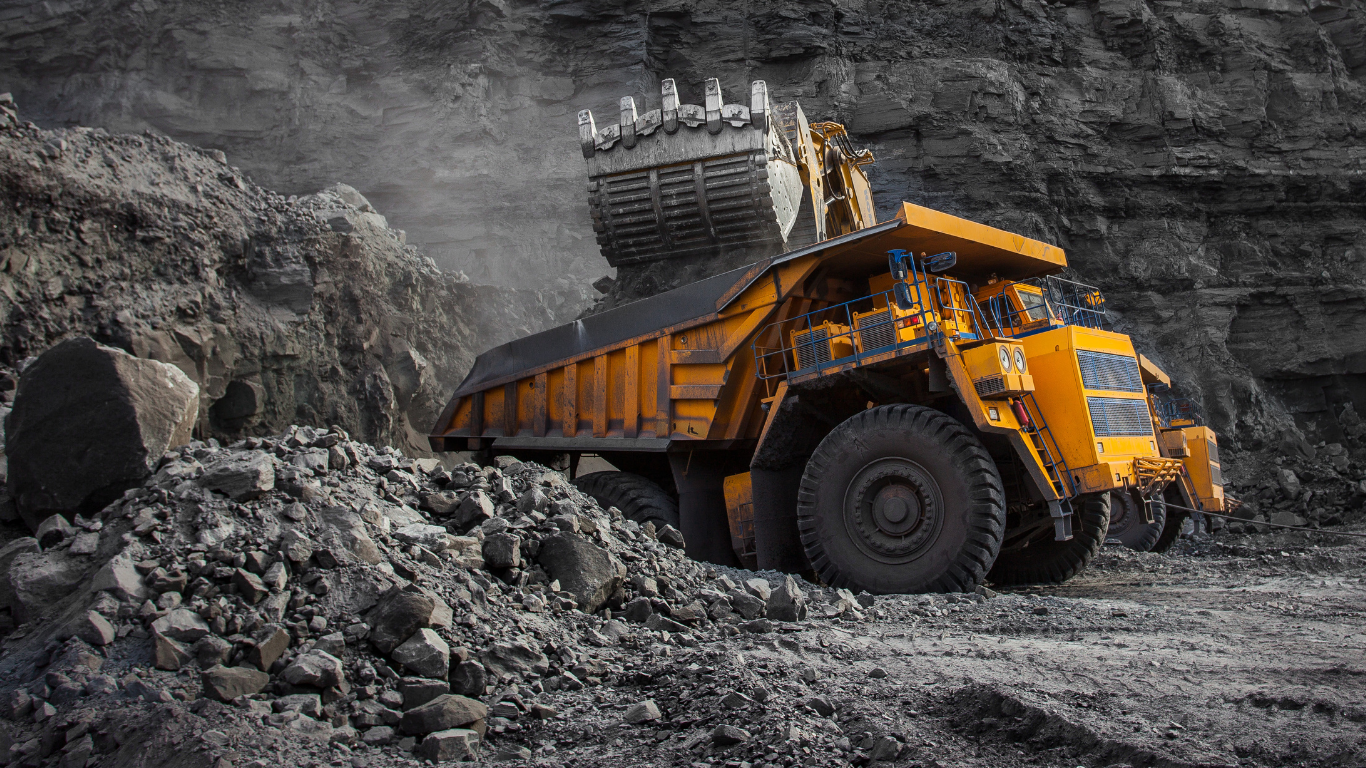
Mining & METS equipment and technology providers managing pit‑to‑port optimization.

Cross-sector advanced manufacturers where investments in robotics, automation, and AI are hitting a complexity wall, and traditional planning tools can no longer keep up with variability in orders, assets, and supply.
Frequently Asked Questions
-
No. The vast majority of our clients do not have internal quantum teams or quantum hardware. The Quantum Readiness & Risk Radar™ is designed to help you make first‑principles, fiduciary decisions before you commit to any vendor, platform, or internal hiring.
-
For manufacturers, “quantum risk” is not abstract or theoretical.
It refers to two concrete categories of exposure:
Security risk: Long-lived data, IP, designs, or operational information that may need to remain secure for decades as cryptographic assumptions change.
Decision risk: Operational and planning problems whose complexity has exceeded the limits of classical optimization tools, creating hidden margin loss or instability.
Risk Radar™ evaluates whether either of these risks is material, not whether quantum is “interesting.”
-
No. Risk Radar™ is not an IT audit, a penetration test, or a cybersecurity compliance exercise.
It is a cross-functional executive diagnostic that evaluates:
Operational complexity and decision pressure
Data longevity and governance exposure
Readiness, constraints, and economic justification
IT and security are inputs, not the focus.
-
Risk Radar™ is a fixed-scope, four-week engagement.
It includes:
Executive and stakeholder interviews
Review of representative data, systems, and governance artifacts
Scoring across multiple readiness and risk domains
A board-ready diagnostic and decision readout
It is intentionally time-boxed to support leadership decision-making without disrupting operations.
-
Risk Radar™ is priced as a fixed-fee executive assessment.
Pricing depends on organizational scale and complexity, but it is intentionally designed to be:
Approachable at the executive level
Independent of downstream services
Non-contingent on pilots or follow-on work
There is no obligation to proceed beyond the diagnostic.
-
Risk Radar™ is designed to be low-disruption.
Typical internal involvement includes:
Limited executive interviews.
Access to a representative (not exhaustive) data and documentation.
Light coordination with operations, IT, and security leaders.
No dedicated internal team is required.
-
We review representative, high-level inputs — not full system inventories.
This may include:
Planning and scheduling workflows
Operational decision systems (e.g., ERP, MES, APS)
Data governance and retention policies
Security architecture relevant to long-lived data or IP
The goal is decision clarity, not system reconstruction.
-
Risk Radar™ delivers the most value to organizations that:
Operate complex, high-mix or variable manufacturing environments
Have made significant investments in Industry 4.0, AI, or automation
Are experiencing diminishing returns from classical optimization
Face long-lived data or IP exposure
Need board-level clarity before committing capital
It is explicitly not designed for early-stage experimentation.
-
Risk Radar™ evaluates whether post-quantum security considerations are material to your organization today.
For many manufacturers, they are not — yet.
When exposure is material, Risk Radar identifies:
Which data matters
Why it matters
When action would be justified
It does not assume PQC migration is required.
-
Only if the evidence supports it.
Risk Radar™ may recommend:
PROTECT — when governance or security action is justified
OPTIMIZE — when operational value is commercially proven
WAIT — when action would be premature
LFI supports subsequent stages only when readiness and value are demonstrated.
Risk Radar is designed to prevent premature pilots, vendor lock-in, and unnecessary investment.