Quantum Advantage for Aerospace & Defense
Sovereign Capabilities
Resilience in a Post-Quantum World
The battlefield of the future is quantum. From ‘GPS-denied’ navigation to the existential threat of ‘Harvest Now, Decrypt Later’ (HNDL), we prepare the defense industrial base for the physics of the next decade.
The ‘Harvest Now, Decrypt Later’ Risk
Foreign adversaries are intercepting your encrypted data today (blueprints, comms) to decrypt it when quantum computers mature. Your long-lifecycle IP is already compromised.
Navigation Fragility
In jammed environments, GPS is a liability. Classical inertial navigation drifts over time, endangering autonomous missions.
Computational Fluid Dynamics (CFD) Limits
Designing hypersonic airframes requires solving Navier-Stokes equations that choke even the fastest supercomputers, slowing design cycles by months.
The Strategic Threats:
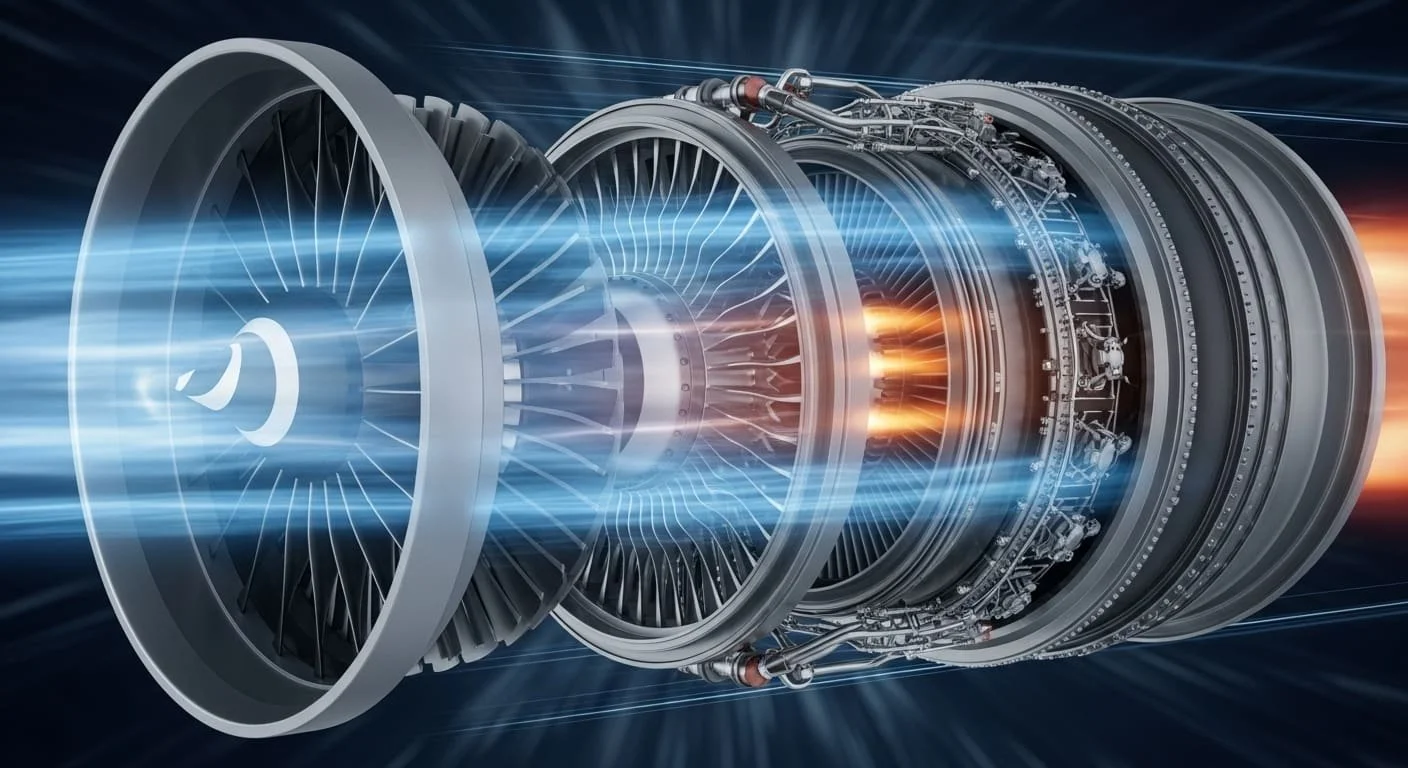
Industry Case Study (Rolls-Royce): Deep Tech Velocity - Breaking the Fluid Dynamics Barrier
The Complexity Wall (The Challenge): Computational Fluid Dynamics (CFD) is the bottleneck of aerospace innovation. Simulating airflow for jet engines on classical High-Performance Computing (HPC) clusters can take multiple weeks. This Complexity Wall slows design iteration, burns R&D cash, and delays critical defense and commercial capabilities.
The Quantum Breach (The Solution): Rolls-Royce partnered with software leaders to deploy Quantum-Enhanced Algorithms (integrating PennyLane/Riverlane architectures). This hybrid workflow targeted the specific non-linear equations that choke classical supercomputers.
Industrial Profit & Velocity (The Outcome):
R&D Acceleration: Simulation runtimes slashed from weeks to less than one hour.
Strategic Advantage: Enabled orders-of-magnitude faster prototyping cycles.
Capital Efficiency: Drastically reduced the cost of knowledge, allowing engineers to validate designs before cutting metal.
LFI Core Operational Capabilities
Harvest Now, Decrypt Later (HNDL): Long-lifecycle IP (blueprints, stealth designs) are being stolen today for future decryption.
-
Your platforms are designed for a 30+ year service life, yet the encrypted blueprints defining their stealth and avionics are being stolen today. Harvest Now, Decrypt Later (HNDL) strategies ensure that once quantum fault tolerance is achieved, your fleet’s defensive advantage will be nullified while it is still in service. This represents a critical Board-level liability that threatens the long-term viability of national defense assets.re
-
Quantum Readiness & Risk Radar. We treat cryptographic agility as a national security imperative. Leveraging our Federal-Grade rigor (Cage Code 16A49), we execute a Cryptographic Visibility & Inventory (CVI) audit to identify vulnerable long-lifecycle data. We prioritize the migration to Post-Quantum Cryptography (PQC), securing the platform’s intellectual property against future decryption threats.
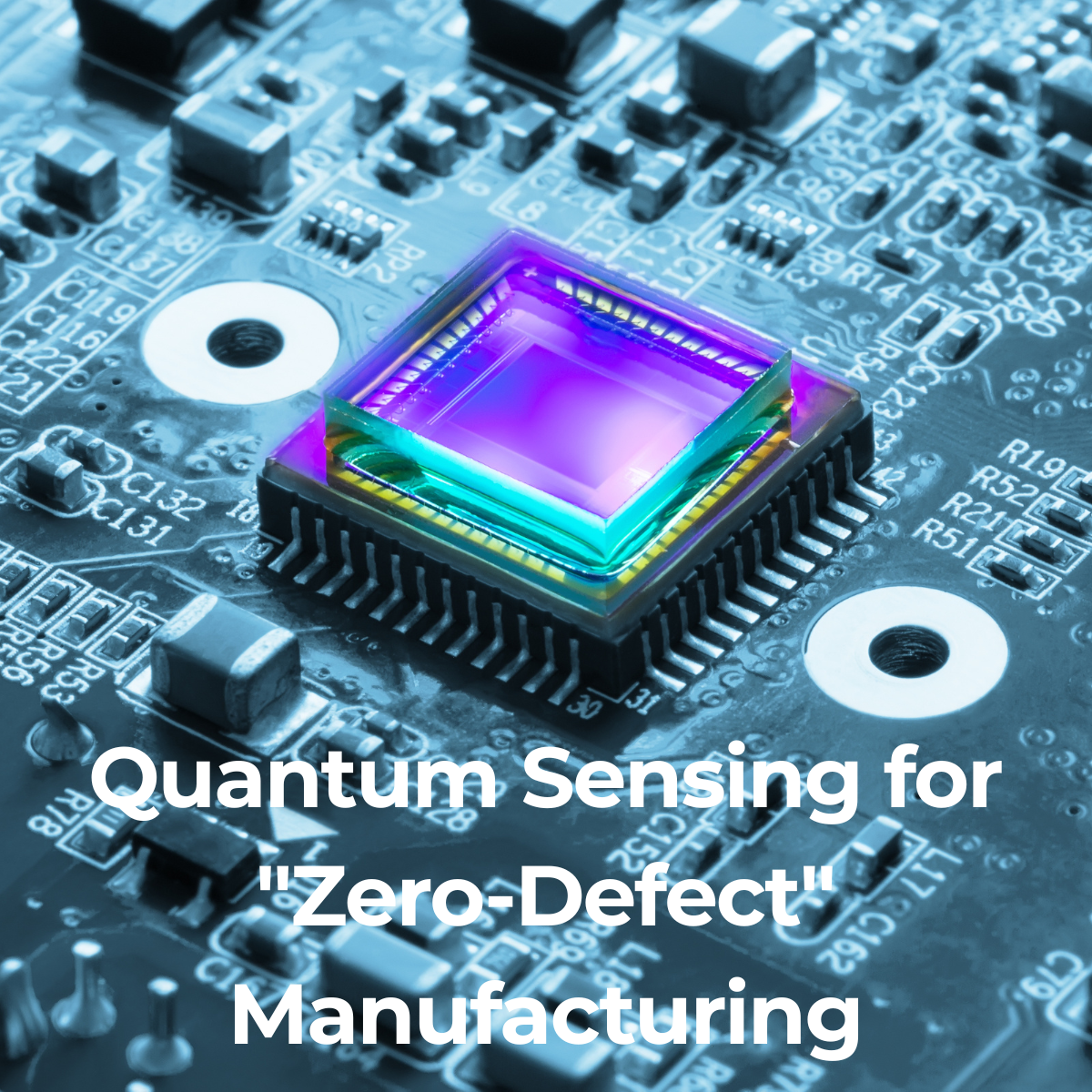
Composite Failure: Standard NDT (Non-Destructive Testing) misses micro-defects or corrosion in advanced fuselage composites.
-
In hypersonic and stealth environments, "tolerance" is effectively zero. Traditional Non-Destructive Testing (NDT) often misses micro-delamination or corrosion in advanced composites until structural integrity is compromised. Relying on "good enough" detection methods for next-generation airframes invites catastrophic failure and risks grounding entire fleets.
-
Quantum Sensing (Zero-Defect Manufacturing). We deploy sensors based on Atomic Magnetometers to detect minute magnetic field anomalies deep within composite structures. This provides absolute visibility that exceeds the sensitivity of classical X-ray or ultrasound, ensuring true "Zero-Defect" manufacturing for mission-critical assets.
Computational Limits: Simulating fluid dynamics and material stress for hypersonic vehicles is NP-Hard for classical silicon.
-
In hypersonic and stealth environments, "tolerance" is effectively zero. Traditional Non-Destructive Testing (NDT) often misses micro-delamination or corrosion in advanced composites until structural integrity is compromised. Relying on "good enough" detection methods for next-generation airframes invites catastrophic failure and risks grounding entire fleets.
-
Hybrid Optimization & Digital Twin Pilots. We bridge the simulation gap by deploying hybrid quantum-classical solvers to run high-fidelity simulations of complex physical systems. By navigating vast energy landscapes more efficiently than silicon alone, we accelerate the discovery of heat-resistant materials and optimized aerodynamic profiles.
Regulatory Compliance: Navigating ITAR and export controls for deep tech requires strict governance and Federal-Grade rigor.
-
Adopting deep tech in a defense context is a regulatory minefield. Without strict governance, integrating foreign-sourced algorithms or hardware can trigger Deemed Export violations or ITAR non-compliance. These breaches do not just stall projects; they threaten federal contracts and national security clearances.
-
The Virtual CQO (Governance Track). Operating under Cage Code 16A49, LFI provides Federal-Grade governance. We act as your compliance shield, implementing Technology Control Plans (TCPs) and segregating data to ensure that your quantum innovation strategy remains fully ITAR and NIST 800-171 compliant.