
Immunize Your Enterprise Against Q-Day.
The Liability Wedge: Why This is a Board Issue
Most organizations view Quantum Security as a future IT ticket. This is a fiduciary error.
Adversaries are actively executing ‘Harvest Now, Decrypt Later’ (HNDL) attacks. They are exfiltrating your encrypted data today, aerospace schematics, pharma formulas, defense blueprints, and storing it to be decrypted the moment a fault-tolerant quantum computer comes online.
The LFI Doctrine: If you cannot guarantee your encryption will hold for the lifecycle of your product (e.g., an aircraft flying for 20 years), you are already in breach of your security obligations.
Cryptographic Visibility & Inventory (CVI)
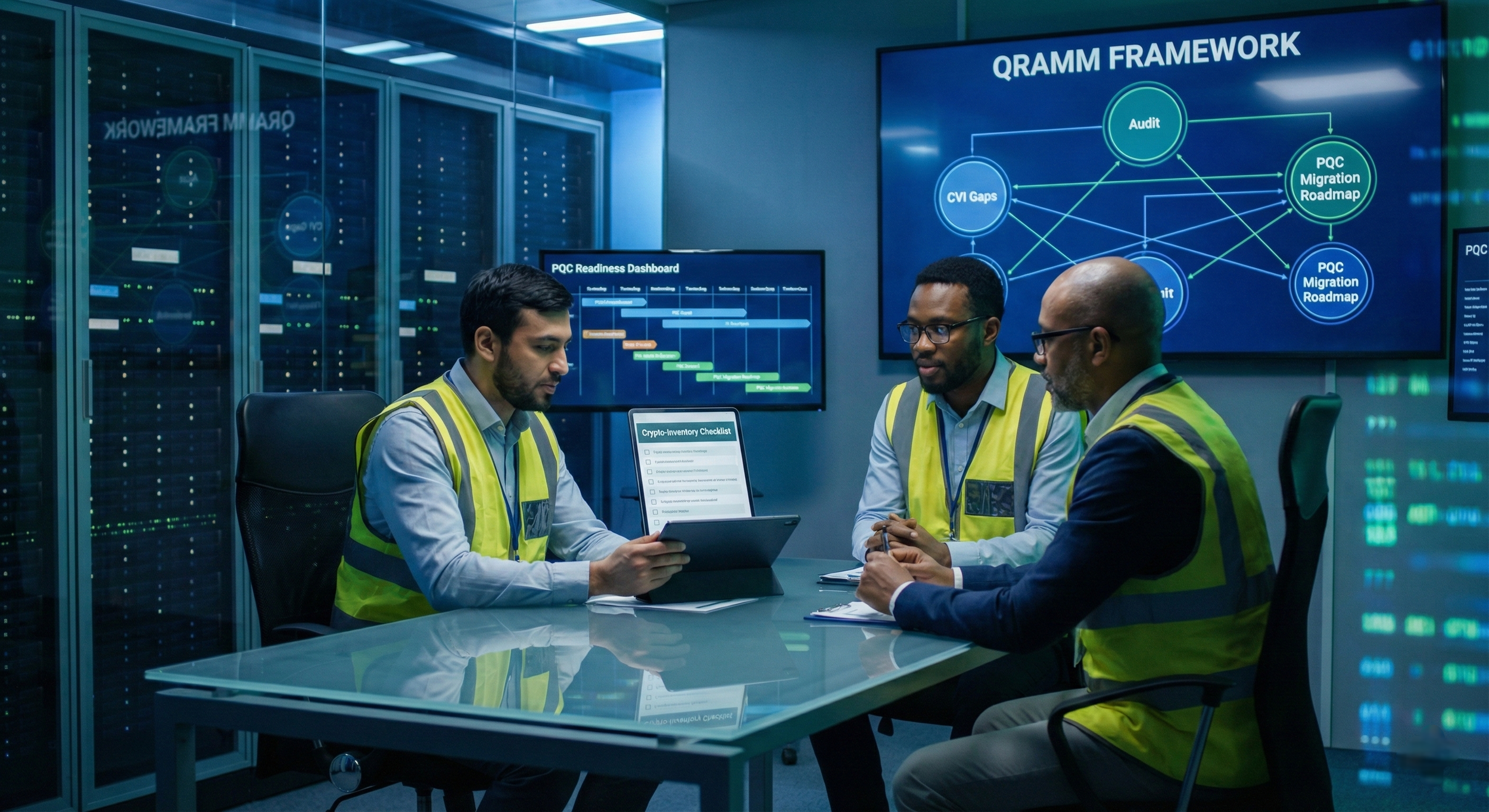
You cannot protect what you cannot see. Modern enterprise encryption is messy, buried in legacy code, third-party libraries, and forgotten APIs.
LFI delivers a surgical Cryptographic Visibility & Inventory (CVI). We don't just scan; we map the Invisible Dependencies that will break when Q-Day arrives.
Discovery: We deploy automated scanning tools to identify every instance of non-quantum-safe encryption (RSA, ECC) across your IT and OT (Operational Technology) environments.
Supply Chain Audit: We interrogate your software vendors. If their code isn't PQC-ready, your perimeter is breached.
Prioritization: We rank assets by Crypto-Value. We don't fix everything at once; we secure the Crown Jewels first.
The Road to PQC: A Managed Migration
Migrating to NIST-approved Post-Quantum Cryptography is the largest software upgrade in history. LFI simplifies the chaos into three execution phases, managed by your Virtual Chief Quantum Officer (vCQO).
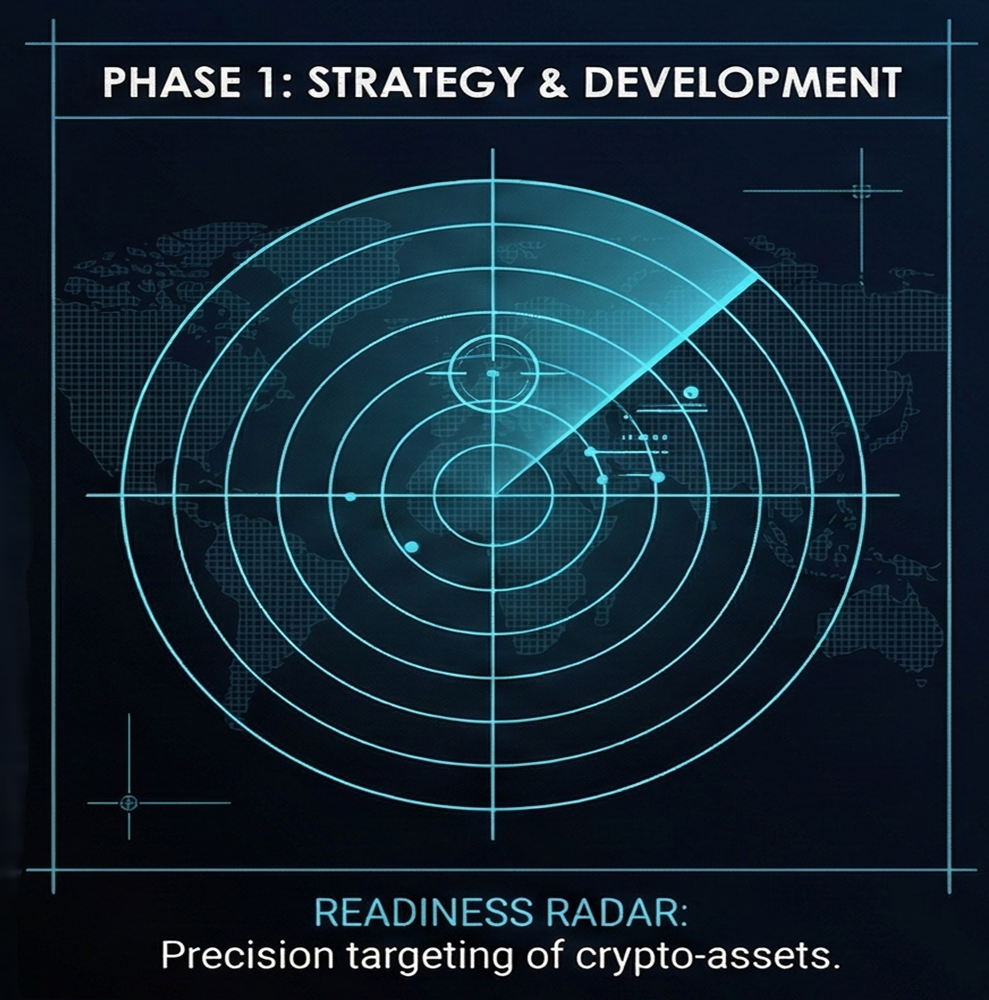
Phase 1: Strategy & Discovery
The Audit: Identify crypto-assets and map data lineage.
The Risk Profile: Quantify the HNDL threat level for specific datasets.
The Roadmap: Align migration timelines with NIST standards and budget cycles.
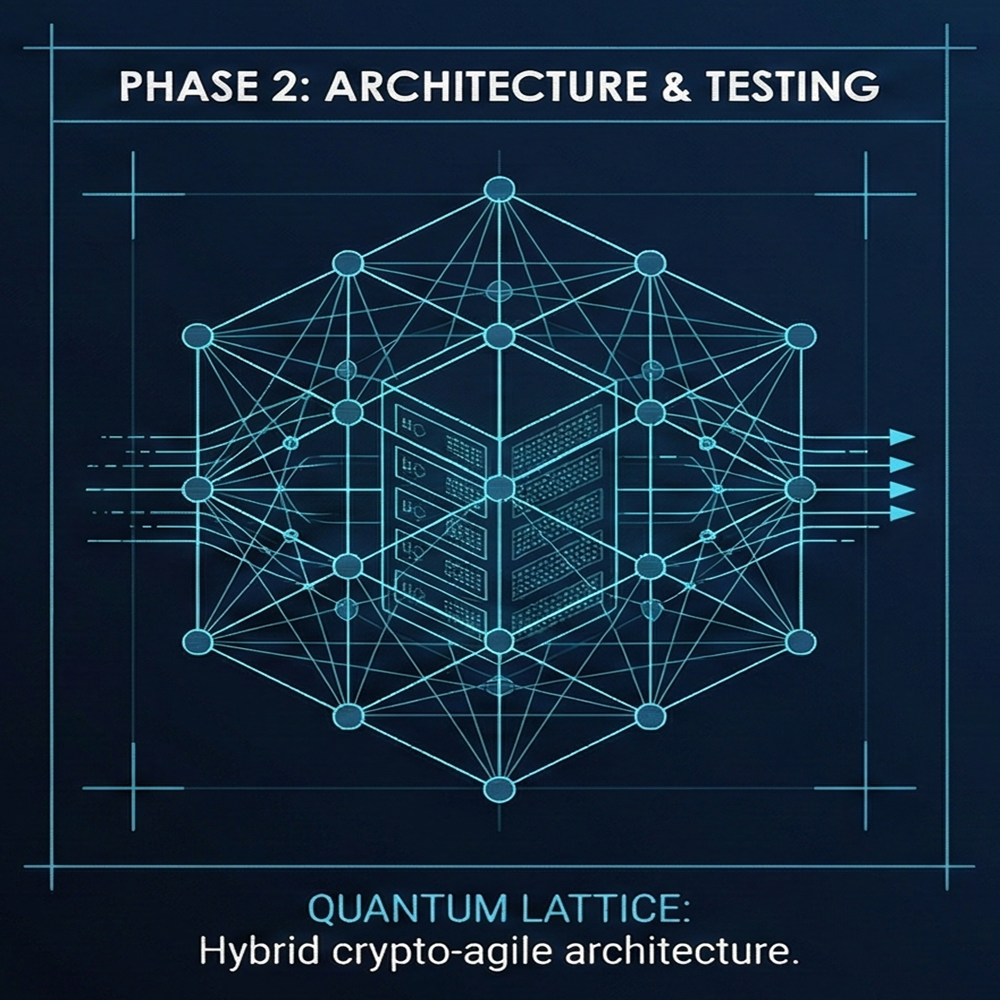
Phase 2: Architecture & Testing (The Sandbox)
Crypto-Agility: Redesign systems to swap encryption standards without breaking applications.
Hybrid Implementation: Deploy hybrid (Classical + PQC) certificates to ensure interoperability during the transition.
Performance Testing: Validate that new PQC algorithms don't slow down your factory floor or cloud latency.
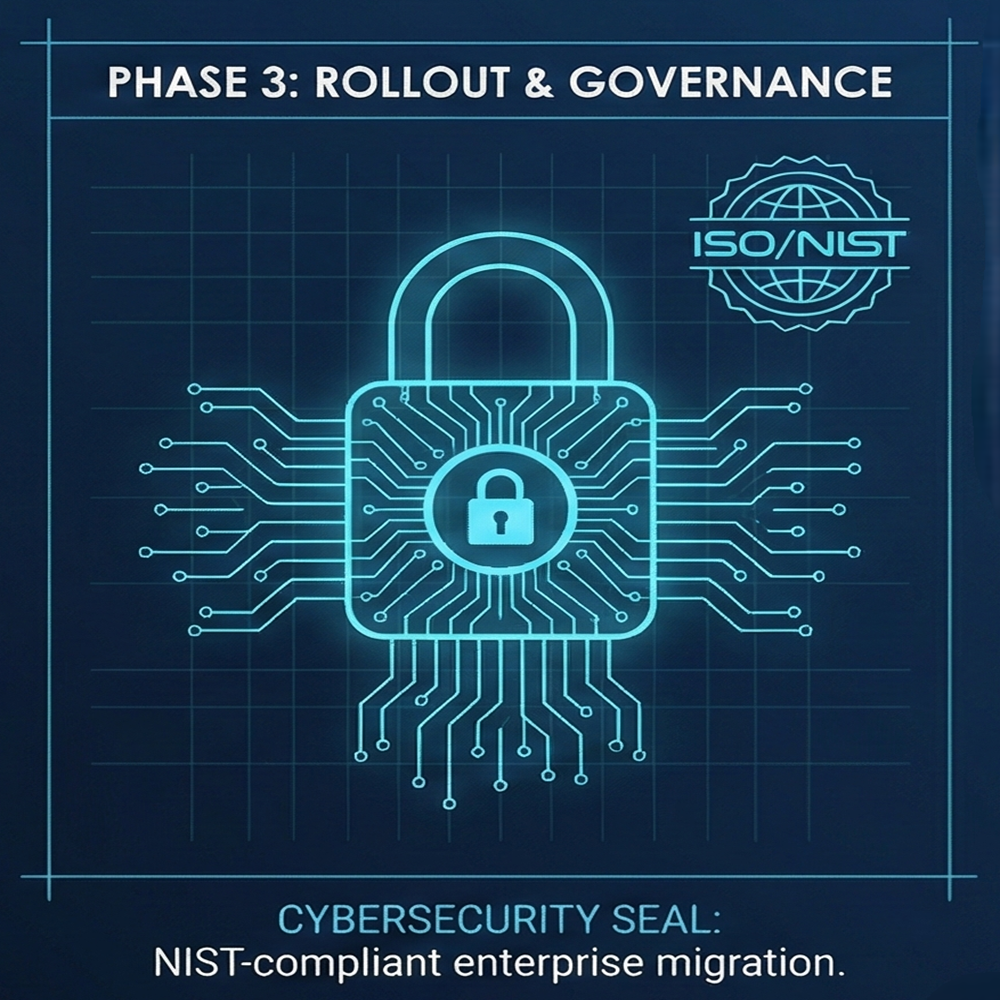
Phase 3: Rollout & Governance
Enterprise Migration: Systematic replacement of legacy keys with PQC standards (Dilithium, Kyber, etc.).
Vendor Enforcement: Contractual mandates ensuring your supply chain remains compliant.
Crypto-Agile Management: Continuous monitoring to adapt to new cryptographic threats as they emerge.
Powered by the Best. Managed by LFI.
We are technology agnostic. We do not force a single tool on you. Through the LFI Quantum Syndicate, we architect your defense using best-in-class partners for PQC algorithms and scanning.
LFI acts as the General Contractor. We bring in the specialized 'subcontractors' for the code, but we hold the blueprint and the liability.
The Q-Day Intelligence Brief FAQs
-
‘Harvest Now, Decrypt Later’ is an active cyber-espionage strategy where adversaries exfiltrate and store encrypted data today (such as aerospace designs, pharmaceutical formulas, or defense blueprints) anticipating that future fault-tolerant quantum computers will be able to break current encryption standards (like RSA and ECC). For manufacturers with long-lifecycle intellectual property, this means data stolen today is effectively already compromised.
-
‘Q-Day’ is the hypothetical date when a quantum computer becomes powerful enough to break current public-key encryption. LFI advises clients to ignore specific calendar predictions and instead apply the ‘Mosca Theorem’: if the shelf-life of your data plus the time required to migrate your systems exceeds the time remaining until a quantum computer arrives, you are already too late. Given that migration can take years, the risk deficit exists today.
-
A CVI is a comprehensive audit that maps an organization's invisible cryptographic dependencies. Modern encryption is often hard-coded into legacy Operational Technology (OT), third-party libraries, and API calls. LFI performs a CVI to discover these hidden vulnerabilities, creating a complete inventory of assets that require remediation to achieve Crypto-Agility.
-
LFI operates with Cage Code 16A49, adhering to the strict compliance and security standards required of U.S. Federal contractors. Unlike generalist firms, we treat quantum security as a national security issue. We utilize proprietary frameworks like the QRAMM (Quantum Readiness Assessment Maturity Model) to ensure clients meet the same rigorous standards expected in the aerospace and defense sectors.
-
Post-Quantum Cryptography refers to new cryptographic algorithms (recently standardized by NIST) that are designed to be resistant to attack by both classical and quantum computers. Migrating to PQC is the only defensible strategy to immunize data against the quantum threat. LFI helps organizations transition from legacy standards (RSA) to these new PQC standards (e.g., ML-KEM).
-
Quantum risk is not merely an IT ticket; it is a corporate governance issue. Failing to prepare for Q-Day exposes the enterprise to catastrophic loss of intellectual property and potential uninsurable liability. LFI positions the transition to PQC as a requirement for long-term risk management and cyber-insurance eligibility, ensuring Directors fulfill their fiduciary obligations to protect shareholder value.
-
There is a severe global shortage of quantum-literate talent, with qualified PhDs often commanding salaries exceeding $300,000. Most internal IT teams lack the specialized physics and cryptographic expertise to manage a PQC migration. LFI solves this by providing a ‘Virtual Chief Quantum Officer (vCQO), giving clients access to elite fractional leadership to oversee the transition without the overhead of full-time hires.
-
Crypto-Agility is the ability to replace cryptographic primitives (keys and algorithms) without disrupting the underlying infrastructure or halting production. In advanced manufacturing, where downtime is costly, systems must be architected to allow for seamless updates. LFI identifies ‘crypto-agile’ gaps in your supply chain to ensure future security updates do not break factory operations.
-
LFI practices ‘Radical Technology Agnosticism. We do not act as a reseller for any single vendor. Instead, we serve as an independent fiduciary, orchestrating the ‘LFI Quantum Syndicate’ to select the best-in-class scanning tools and PQC algorithms that fit the client’s specific mathematical and operational requirements.
-
The first step is to quantify the exposure. LFI recommends a fixed-fee ‘Quantum Readiness & Risk Radar’ engagement. This diagnostic effectively audits your current posture, mapping your cryptographic inventory and prioritizing assets for protection. This provides the Board with the verified data needed to authorize a full PQC migration roadmap.