Quantum Optimization for Logistics & Supply Chain
The End of the Best Guess
Solving the Combinatorial Explosion.
Modern supply chains have evolved into chaotic, stochastic networks that defy classical logic. When variables like weather, tariffs, and demand shift simultaneously, classical solvers choke. We deploy hybrid quantum algorithms that navigate the NP-Hard chaos to find the true optimum.
The Combinatorial Cliff
Optimizing a route for 10 trucks is easy. Optimizing for 100 trucks with time windows and fuel constraints creates more possible combinations than atoms in the universe. Classical computers must prune the search, settling for sub-optimal routes that waste millions.
The Traveling Salesman Trap
Variations of the Traveling Salesman Problem (TSP) and Knapsack Problem are ubiquitous in logistics. As the number of network nodes increases, the computational power required scales exponentially, overwhelming even the most powerful supercomputers.
Dynamic Fragility: Linear supply chains have shattered. Today's networks are multi-echelon and stochastic. You cannot optimize a network in real-time when your solver takes hours to run a single batch.
The NP-Hard Problems
Industry Case Study (Iberdrola): The Network Complexity Crisis - Optimizing Infrastructure at Scale
The Complexity Wall (The Challenge): Optimizing a massive distribution network is an NP-Hard problem. Whether placing grid-scale batteries or positioning logistics hubs, the variables (cost, reliability, and service coverage) scale exponentially. Classical heuristics struggle to balance these high-dimensional constraints, often pruning the data and leaving millions in efficiency gains on the table.
The Quantum Breach (The Solution): The team deployed Quantum-Inspired Tensor Networks (via the Singularity platform) to tackle the Facility Location Problem across the Gipuzkoa grid. This approach utilized quantum mathematics on classical infrastructure to navigate the complex energy landscape and identify global minima that standard solvers missed.
Industrial Profit & Velocity (The Outcome):
Benchmarking Dominance: The quantum-inspired algorithms matched or outperformed best-in-class classical benchmarks across all tested network sizes.
Capital Allocation: Optimized the placement of high-value assets, directly improving the Return on Capital Employed (ROCE).
Operational Resilience: Enhanced network stability (voltage control) and reliability, effectively de-risking the supply infrastructure against stochastic demand.
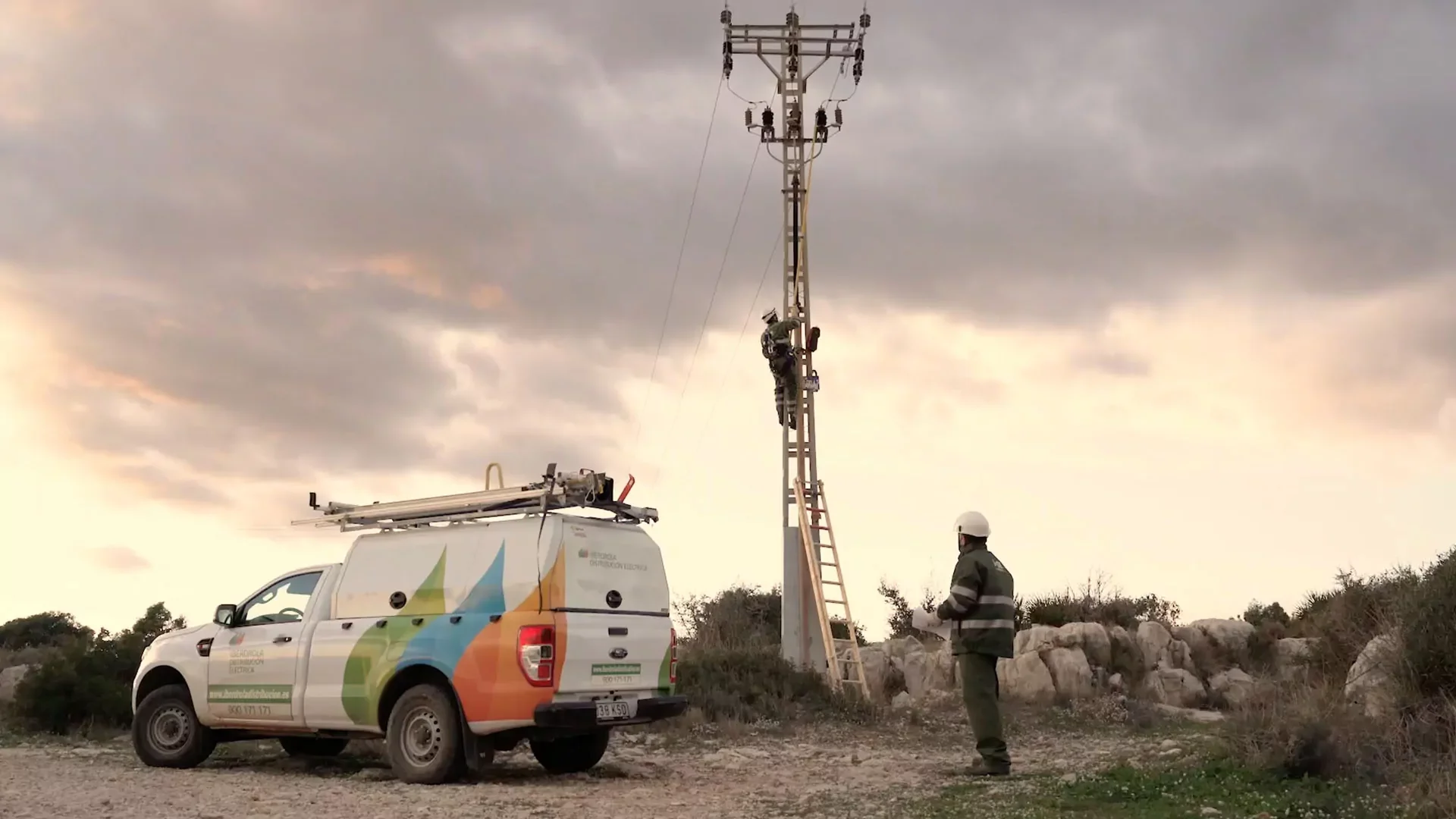
This is the definition of Commercial Utility. They didn't wait for a quantum computer; they used Quantum-Inspired math to solve a massive logistics problem today. This proves that Logistics & Supply Chain leaders can unlock Quantum Advantage on their current hardware.
LFI Core Operational Capabilities
Routing Chaos: Global networks with thousands of nodes (weather, tariffs, demand) create chaotic NP-Hard routing problems.
-
The Routing Chaos (NP-Hard Networks) - Modern global supply chains have evolved from linear pipelines into chaotic, stochastic networks. Optimizing a network with thousands of variables (weather patterns, geopolitical tariffs, and dynamic demand) is an NP-Hard problem. Classical computing cannot calculate the optimal path in real-time, forcing logistics leaders to rely on heuristics (estimates) that leave millions in fuel savings and efficiency gains on the table.
-
Hybrid Network Optimization (CVRP). We solve the Capacitated Vehicle Routing Problem (CVRP) without approximation. We deploy hybrid quantum-classical solvers that navigate vast combinatorial energy landscapes to identify global minima. This allows for the real-time optimization of fleet routing and network design, delivering mathematically validated efficiency that outperforms classical benchmarks.
Bin Packing Inefficiency: Optimal container loading is mathematically intractable for classical heuristics, wasting fuel and space.
-
The Bin Packing Efficiency Gap - Optimal container loading (3D Bin Packing) is mathematically intractable for classical silicon. Current logistics software relies on greedy algorithms and heuristics that fail to maximize volume utilization, effectively forcing you to ship air. This operational inefficiency directly inflates fuel costs per unit and increases your carbon footprint, eroding margins across the entire fleet.
-
Hybrid Optimization & Digital Twin Pilots. We deploy hybrid quantum-classical solvers to resolve the combinatorial complexity of cargo loading. By assessing millions of volumetric configurations simultaneously, we maximize cubic utilization and fleet density. This transforms theoretical capacity into physical reality, significantly reducing the cost-per-mile.
Vendor Lock-In Risk: CTOs risk betting the entire supply chain strategy on the wrong hardware modality.
-
The Vendor Lock-In Trap - The quantum hardware landscape is fractured, with competing modalities (Annealers, Neutral Atoms, Superconducting) vying for dominance. For a Logistics CTO, betting the entire supply chain strategy on a single hardware vendor is a massive capital risk. Choosing the wrong horse today locks the enterprise into a specific development roadmap that may become technically obsolete or commercially unviable tomorrow.
-
The Virtual CQO (Radical Agnosticism). We operate under a doctrine of Radical Agnosticism. We serve the Math, not the Machine. As your independent arbiter, we evaluate the specific mathematical structure of your routing problems and match them to the optimal hardware modality. We protect your budget from vendor lock-in, ensuring you always deploy the most effective solver available.
Data Visibility Risks: Supply chain data infrastructure often lacks "crypto-agility," leaving manifests and networks vulnerable.
-
The "Dark Data" Risk (Crypto-Agility) - Modern supply chains rely on thousands of API integrations and digital manifests, yet most organizations lack Cryptographic Visibility into this infrastructure. This lack of crypto-agility means you cannot rapidly replace encryption protocols when they are compromised. Currently, your shipping manifests and proprietary network data are being harvested by adversaries for future decryption (HNDL), creating a dormant liability that threatens the integrity of your global operations.
-
Quantum Readiness & Risk Radar. We eliminate the blind spots in your data supply chain. We execute a Cryptographic Visibility & Inventory (CVI) audit to map the specific encryption dependencies within your logistics network. We then engineer a crypto-agile roadmap, ensuring your infrastructure can transition to Post-Quantum Cryptography (PQC) without disrupting global flow.